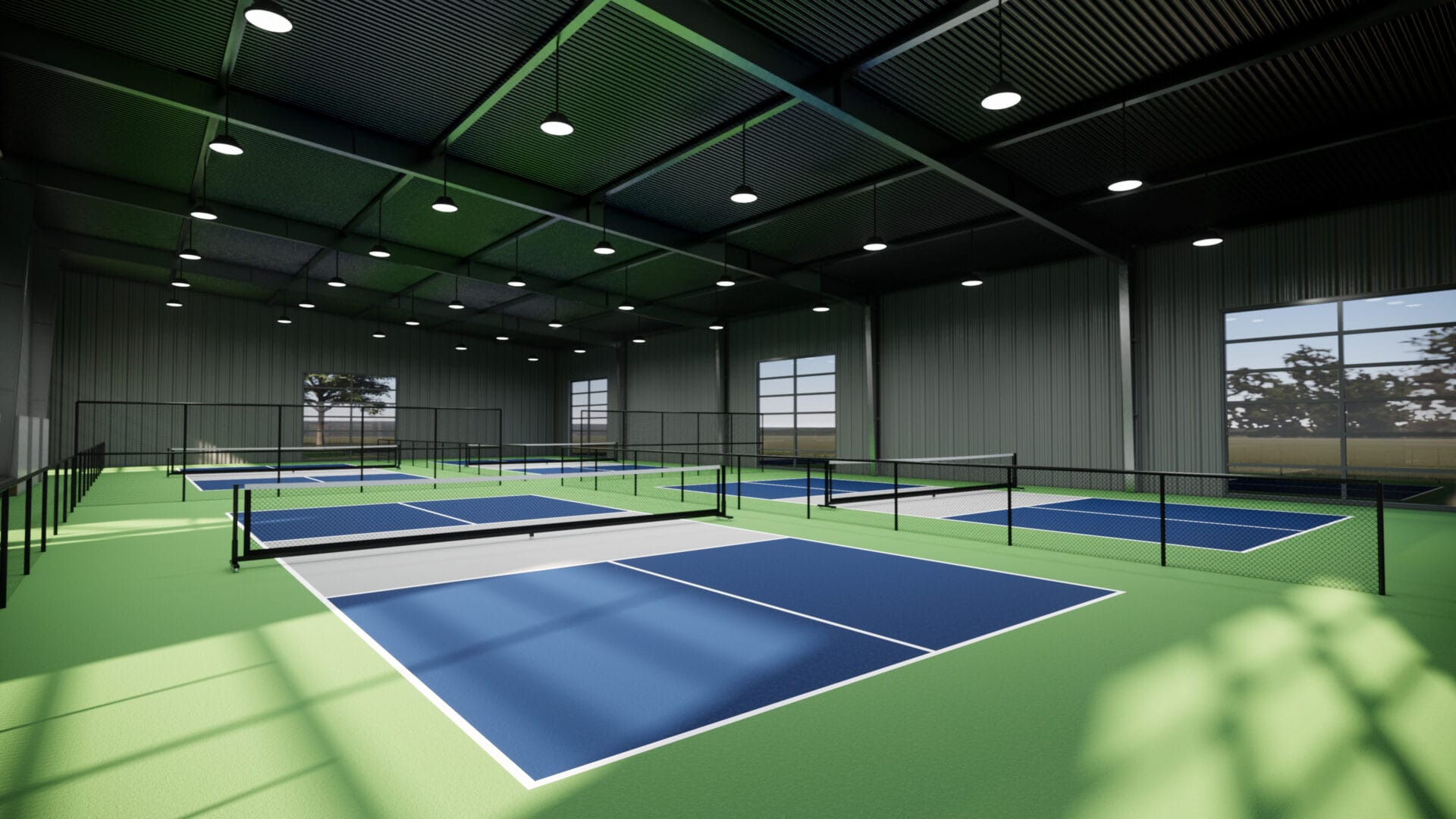
Building a Pickleball Facility – Key Factors for Success
Building a pickleball facility starts with clear goals and a solid plan. Think about how many courts you need now and five years from now, because expansion later costs more. Zoning laws, parking, and sound ordinances are early key factors that can halt progress if overlooked.
Next, choose a trusted builder who knows sports codes and steel framing. A pre-engineered steel shell goes up fast, controls budget, and lasts decades with little upkeep. Steel also supports wide, clear-span roofs, so courts stay free of center posts that interrupt play.
Finally, coordinate with city officials and neighbors. Sharing schedules, traffic plans, and community benefits eases permits and builds goodwill. Smooth approvals shave months off timelines and keep loan costs in check.
The Fastest Growing Sport Needs Modern Sports Facilities
Pickleball is the fastest-growing sport in the United States, drawing new players of every age. Busy parks prove demand, but rain and heat push athletes indoors. Purpose-built sports facilities keep games rolling year-round and unlock membership revenue.
Quality venues also attract tournaments, leagues, and corporate outings. Those events fill hotels and restaurants, making local leaders eager partners. More foot traffic means higher concession sales and steady cash flow for owners.
Corporate sponsors notice, too. Branded scoreboards and banner spots help pay operating costs while giving brands a healthy, family-friendly image. A win for everyone involved.
Perfecting Court Dimensions and Court Surfaces for All Skill Levels
Standard pickleball court dimensions are 20 × 44 feet, but aisle space and safety zones need extra room. Plenty of clearance lets beginners chase lobs without crashing walls. Mark buffer lanes in bright paint so players of all skill levels feel secure.
Choosing the right court surfaces matters for joints and ball bounce. Textured acrylic over concrete offers consistent speed with low maintenance. Cushioned tiles soften impact for seniors while keeping traction high in fast rallies.
Test different colors under your planned lighting. Contrasting tones improve visibility, reduce eye strain, and boost player experience across long tournament days.
Building an Indoor Pickleball Facility – Height, Air, and Light
When building an indoor pickleball facility, roof pitch and ceiling height drive play quality. Aim for at least 24 feet clear to avoid lob kills and light glare. Steel rafters span wide widths without center columns, making that height easy to achieve.
Climate control keeps athletes comfortable playing even in humid summers. De-humidifiers paired with fresh-air exchange stop condensation on floors and paddles. Include zoned HVAC to sharpen temperature control and cut monthly bills.
Finally, choose LED fixtures with minimal flicker. Even light across the court eliminates shadows that distract serious pickleball players and referees alike.
Blending Outdoor Pickleball Courts with Club Amenities
Not every match needs air-conditioning. Adding outdoor pickleball courts extends capacity on mild days and reduces wait times. Steel shade canopies and wind screens boost comfort without enclosing the space.
Position courts away from parking to reduce stray ball hazards. Plant sound-absorbing shrubs between fences and houses to keep neighbors happy.
Outdoor courts also create natural social hubs. Benches, water refill stations, and string-light patios encourage fans to linger and buy snacks, driving secondary revenue for facility owners.
Lighting, Acoustics, and the Ultimate Player Experience
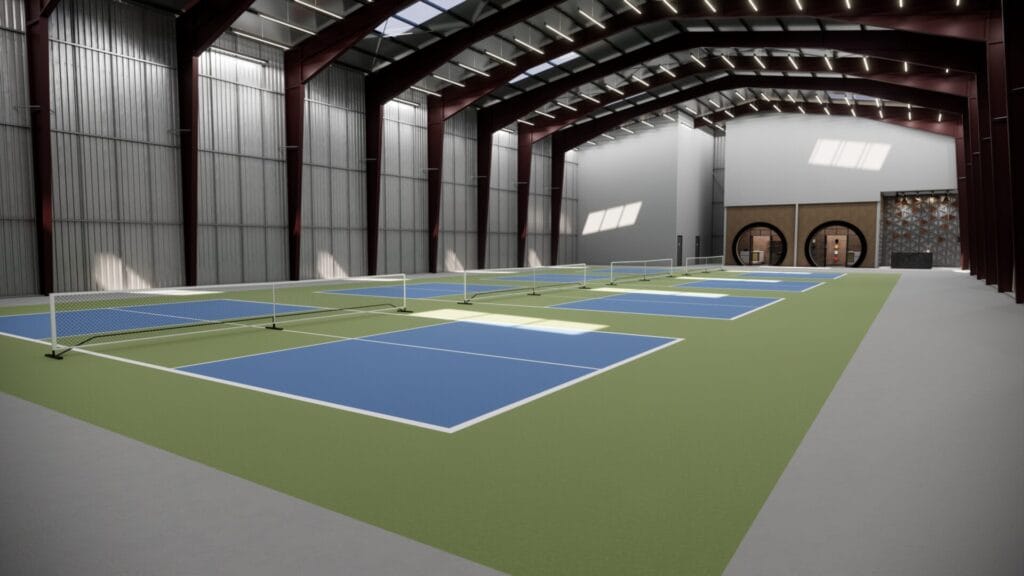
Great lighting raises performance and safety. LED fixtures mounted above the baseline cut shadows and glare, keeping volleys sharp. Adjustable dimmers let coaches create training drills or evening events without straining eyes.
Acoustics matter, too. Sound-absorbing wall panels dampen the sharp “pop” of paddles, so conversations and coaching cues are clear. Happy ears equal happy players.
Mount ceiling fans over spectator zones to keep fresh air circulating. Small touches like this elevate player experience and drive word-of-mouth referrals from visiting pickleball enthusiasts.
Designing Locker Rooms for Comfortable Playing and Quick Turnaround
Clean, well-lit locker rooms set the tone for every visit. Include generous benches and ventilated gear cubbies to prevent odors. Non-slip tile flooring withstands wet shoes and heavy traffic.
Separate changing stalls respect privacy while speeding player turnaround between games. Install low-flow showers to manage water bills without sacrificing comfort.
Add phone-charging shelves and towel drop chutes. These small conveniences make members feel valued and encourage longer stays in your facility.
Adding Pro Shops to Keep Members Geared Up
A well-stocked pro shop boosts revenue and convenience. Carry paddles for all skill levels, plus demo models so newcomers find the perfect fit. Stock shoes, balls, and grip tape so players never miss a match due to worn gear.
Bundle starter kits with membership sign-ups. A free lesson and paddle package encourages commitment and reduces intimidation for first-timers.
Rotate seasonal merchandise like hoodies or holiday gift packs. Fresh inventory keeps shelves interesting and turns casual buyers into loyal shoppers.
Growing a Thriving Pickleball Business and Pickleball Club
Running a successful pickleball business goes beyond great courts. Host beginner clinics, ladder leagues, and charity events to build community. Regular programming fills courts during off-peak hours and secures recurring revenue.
Create a pickleball club membership tier with perks like advanced booking and guest passes. Loyalty programs encourage frequent visits and positive reviews.
Leverage social media to spotlight member achievements and facility news. Engaged followers promote your brand for free, expanding reach to new markets.
Balancing Long-Term Maintenance with Smart Materials
Steel buildings resist termites, rot, and mold, requiring fewer repairs over the long term. Galvanized panels shrug off rust even in coastal climates. Panels or green roofs to not only reduce maintenance costs but also enhance the aesthetic appeal of your facility.
Additionally, implementing sustainable practices in your facilities can help attract environmentally conscious members. For example, rainwater harvesting systems can be used to irrigate outdoor courts or gardens, saving on water usage and costs.
Choose industrial-grade floor coatings that endure thousands of footfalls without peeling. Budget for annual reseals to protect the investment. LED lighting lasts over a decade, cutting bulb swaps and downtime. Fewer maintenance hours let staff focus on customer service instead of ladder work.
Setting Ideal Ceiling Height and Ventilation for Multiple Skill Levels
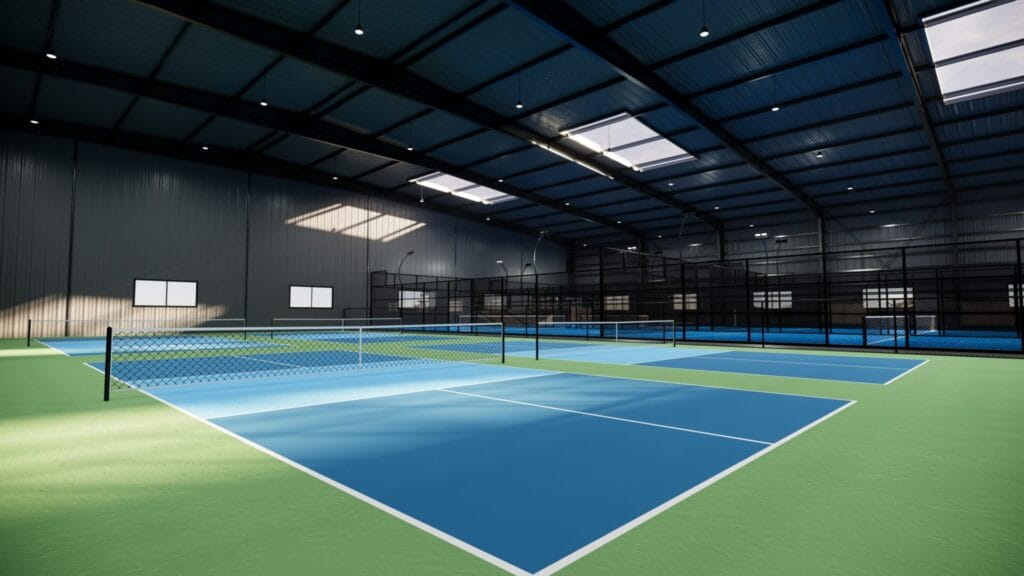
Varied skill levels demand flexible space. High ceilings allow advanced players to practice lobs while still welcoming beginners.
Ventilation removes humidity from intense rallies and keeps acrylic coats dry. Ceiling fans and ridge vents move warm air out, lowering AC loads.
Consider drop-down curtains to divide courts for youth clinics or private lessons. Versatility helps schedule planners fill every hour with paid play.
Designing Revenue-Boosting Pro Shops and Food Courts
Beyond gear, add quick-serve snacks and smoothies near the pro shops. Players refuel between games, and families stay longer.
Install digital menu boards to promote combo deals like paddle stringing plus protein shakes. Cross-selling boosts average spend per visit.
Offer branded apparel featuring club logos. Members become walking billboards, spreading awareness at other gyms and parks.
Partnering with Schools to Inspire Future Pickleball Enthusiasts
Reach out to PE teachers and offer free clinic days. Kids learn fundamentals on your courts and beg parents to return.
Provide equipment grants or discounted court time for school tournaments. Early exposure fuels the next wave of pickleball enthusiasts. Host college intramural championships to showcase your facility and fill slower afternoon slots. Student energy creates buzz that lingers online.
Pickleball is a growing sport that has gained popularity over the years. As a pickleball facility owner, it is important to continually attract new members and keep current ones engaged. One effective strategy to achieve this is by offering combo deals such as paddle stringing plus protein shakes. This not only adds value for your customers but also increases the average spend per visit.
Future-Proofing with Flexible Steel for Indoor Pickleball Courts
A steel shell adapts when demand shifts. Remove end panels to add more indoor pickleball court bays or repurpose space for yoga studios.
Steel beams support hanging scoreboards and mezzanine fitness decks without major reinforcement. Expansion costs stay predictable.
Fast erection schedules cut weather delays, getting revenue flowing sooner than conventional builds. Speed and strength make steel the smart path for growth.
Choose Maverick Steel Buildings and Serve Up Success Today
Ready to make your pickleball dream a reality? Maverick delivers custom steel kits for indoor pickleball facilities, indoor basketball courts, schools, and other fitness center metal buildings of every scale. We engineer wide-span roofs, tall walls, and energy-efficient panels that lower bills from day one.
Our experts guide you through design, permits, and installation, ensuring courts meet proper court dimensions and lighting specs. Pre-cut framing shortens build time, reduces waste, and keeps budgets honest.
Serve the winning shot right now. Contact Maverick Steel Buildings for a fast, free quote and discover why facility owners across the nation trust us to build spaces where pickleball players thrive.
Looking to Build Your
Steel Building in 3D?

 Monday to Friday8 a.m. to 5 p.m.