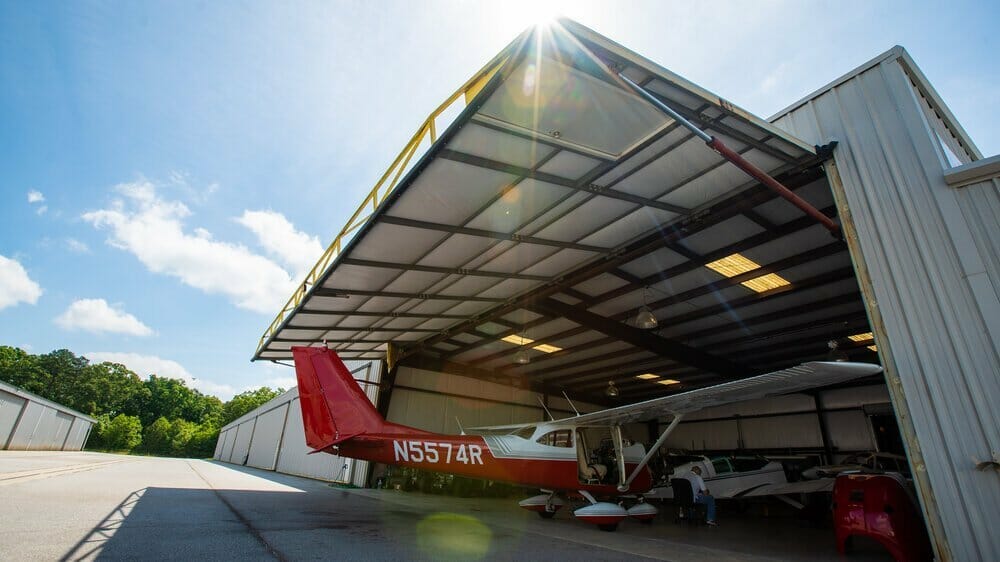
Aircraft Hangar Design Fundamentals for Small Airports
A well-planned aircraft hangar design begins with clear goals. Decide how many planes you must house now and five years from now. Size the footprint so wings clear walls and tug lanes stay straight.
Next, map taxi paths, fuel trucks, and service vans. Good flow keeps ground time low and safety high. Position office pods and parts storage along one side to protect the apron from foot traffic.
Finally, pick structural steel for clear spans. Steel frames eliminate interior posts that snag wingtips, yet they erect quickly and survive harsh weather for decades with little upkeep.
Planning Aircraft Hangar Design and Construction on Tight Sites
Small airports often have odd-shaped lots. Smart aircraft hangar design and construction aligns doors with existing taxiways to save paving. Rotate the building if needed; steel makes custom angles simple.
Check soil reports early. Knowing bearing capacity guides footing depth and costs. Where fill is deep, swap spread footings for piers to trim concrete.
Plan utilities before pouring slabs. Bury conduit and drainage now so crews aren’t cutting fresh concrete later. Thoughtful sequencing keeps schedules firm and budgets calm.
Hangar Designs That Maximize Aircraft Storage and Workflow
Different wingspans need adaptable space. Modular hangar designs use wide-flange rafters and bolt-up bays that slide later when fleets change. Clear space today becomes future shops or lounges tomorrow.
Stack parts cages against the back walls. Rolling ladders reach high shelves without blocking planes. This layout improves aircraft storage density and protects expensive avionics from forklift bumps.
Add mezzanines for pilots’ lounges or training rooms. Elevated offices oversee ramp activity while freeing floor space for tool carts and tug parking.

Choosing the Right Airplane Hangar Door: Bi-Fold and Beyond
The door defines daily ease of use. A bi-fold lifts upward, clearing snow piles and wind gusts that fight sliding panels. Less ground track means fewer maintenance calls.
Hydraulic one-piece doors open faster for quick sorties, yet need strong sidewalls to anchor cylinders. Steel frames handle that thrust without extra bracing.
Add translucent panels along the top edge. Natural light spills inside, cutting energy bills and easing inspections without opening doors on cold mornings.
Meeting Building Codes Without Busting the Budget
When planning your next building project, it’s important to focus on strategies that not only meet code requirements but also save time and money. From improving energy efficiency to ensuring fire safety, there are practical and cost-effective solutions that can make a big difference.
By designing with these considerations in mind, you can streamline approval processes, enhance equipment protection, and keep your project moving forward with fewer delays. Here’s how you can prioritize smart, efficient building practices.
- Ensure stamped drawings comply with local wind, snow, and seismic requirements to expedite approval processes.
- Incorporate low-cost fire safety measures such as draft curtains and ridge-line vent fans for enhanced equipment protection.
- Use high-R insulated panels to improve energy efficiency and maintain comfortable indoor temperatures year-round.
- Address HVAC load reduction through effective building design to meet energy standards and satisfy regulatory inspectors.
- Prioritize quick compliance with building codes to prevent delays and minimize project downtime.
Structural Features That Keep Aircraft Owners Confident
Pilots trust walls that stand firm. Galvanized purlins resist corrosion from de-icing salts, keeping paint bright and structure sound for aircraft owners.
Anchor bolt templates ensure columns are set true. Straight steel avoids door misalignment that can scratch cowlings. Accuracy up front saves years of adjustment.
Add wingtip guards at floor level. Simple rubber bumpers prevent minor contact damage during tight turns, protecting both planes and profits.
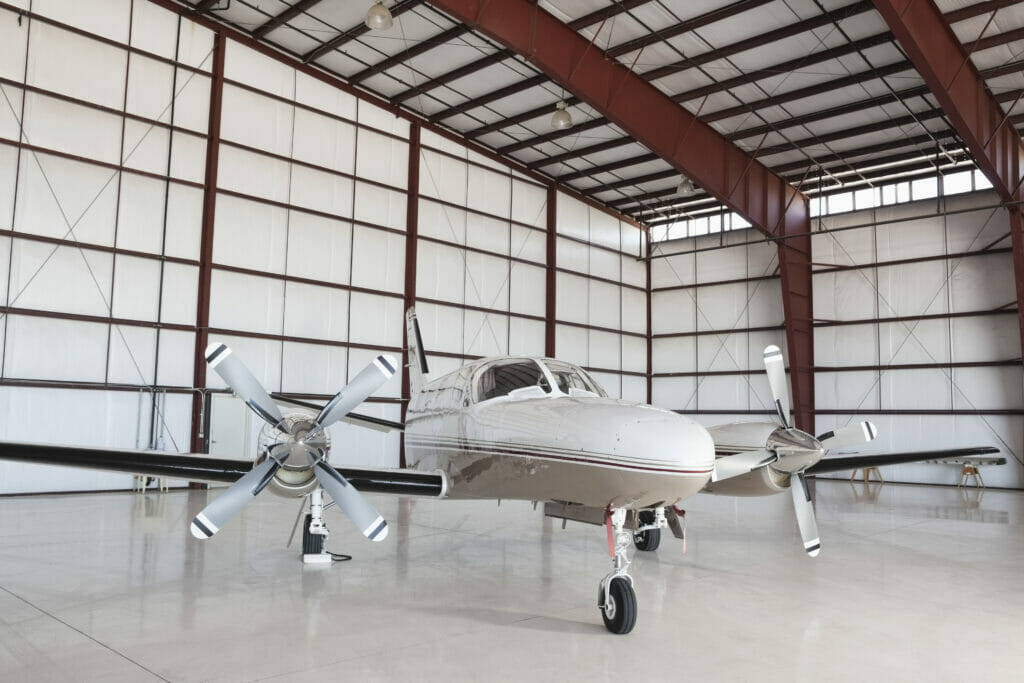
Energy Efficiency and Comfort Inside the Aircraft Hangar
LED high-bay lights cut glare on polished wings and sip power. Instant start at low temps lets crews work dawn patrols without delay.
Radiant tube heaters warm people and machines, not empty air. Heat begins at floor level where techs stand, making winter shifts bearable.
Install destrat fans under the ridge. They push trapped hot air down, balancing temperature and trimming utility bills year-round.
Future-Proofing Your Hangar Designs for New Fleets
Electric aircraft are coming. Plan conduit paths for high-amp chargers now. Empty raceways today avoid tearing walls later.
Roof-ready solar mounts offset charger loads. Steel rafters support panels without extra reinforcement, adding green power and PR value.
Design a spare bay width for drones or rotorcraft. Flexible space means your facility adapts to market shifts without new construction loans.
Choose Maverick Steel Buildings for Premier Aircraft Hangar Design
Maverick delivers turnkey steel kits for any aircraft hangar dream, from hobby bays to full service lines. Our engineers tailor spans, doors, and finishes to small-airport budgets and runway limits.
Pre-cut framing speeds installation, lowers labor, and keeps planes protected sooner. Clear manuals and responsive support guide crews from the first bolt to final inspection.
Fly with confidence. Contact Maverick Steel Buildings today for a free quote and discover how our expert team turns blueprints into durable shelters that pilots trust.
Looking to Build Your
Steel Building in 3D?

 Monday to Friday8 a.m. to 5 p.m.